It is indisputable that steel has been a constant companion of mankind throughout its history, transforming with it in its different stages and evolutions. Although it has always been present, steel and its applications have varied according to the uses we have given it thanks to its capacity for adaptability.
If at the beginning of their discovery we used them to develop cutting tools, today we can find them in vehicles, buildings and even the household appliances we use in our daily lives. Given its adaptability, today we will look at the characteristics of steel and its applications, a material that will surely always be by our side, allowing us to move forward.
What is steel?
Before we begin to look at steel and its properties, we must first give a brief introduction to the material. From a chemical point of view, steel is an alloy, which means that it does not occur naturally, but is manufactured. To be considered an alloy, one of the 2 ingredients in the ‘mixture’ must be iron.
Steel is therefore a mixture of iron, of course, and carbon, a material that makes steel one of the main elements present in a building. But its application is not only this: it is one of the most widely used materials due to its characteristics, which we will see later on. In many cases, this material is also mixed with other elements to obtain certain useful properties for specific projects or tasks, as in the case of stainless steel.
The production of steel has changed over time. Currently, a proportion of carbon is added to the iron to create it that does not exceed 2%. To do this, several steps are indispensable:
- Still in the blast furnace, a piece of iron (impurity) is introduced with coke, a fuel that helps to separate the impurities from the material. In this way we obtain ‘clean’ iron but with very little carbon, so we cannot yet classify it as steel.
- To obtain the desired material, we have to add iron, still in a liquid state, to this element in order to fuse it. We will have to adjust the quantity depending on the type of steel we want to obtain.
- Once this material is obtained, all that remains is to give it the required shape and wait for it to cool.
In addition to the technique we have just explained, it is also completely feasible to recycle steel, as it loses neither quality nor properties. In fact, it is one of the most sustainable materials available. The surplus or scrap steel simply has to be remelted back into the required shape in an electric blast furnace.
Properties
It is because of its physical characteristics that steel has become a companion on humanity’s journey towards change and evolution. The elements that form it and the chemical or physical method used in its production vary its properties, but there are some properties common to all types of this material, such as, for example:
- Its density is usually 7850 kg/m3.
- It has properties of expansion on heating and contraction on cooling.
- Its melting point is approximately 3000 °C.
- It absorbs energy before breaking and is very ductile, so it can be deformed without losing properties.
- Hence also its malleability and the possibilities of making almost any shape out of it, from sheets (the well-known tinplate) to wires.
- It is often prone to corrosion, but other chemical elements (nickel and chromium) need only be added to the mixture to produce the famous stainless steel.
- It can be easily welded.
- It is a very good conductor of electricity.
- It often has magnetic properties.
- Its hardness is determined by the amount of carbon in the iron-carbon mixture. The higher the percentage of carbon, the greater the hardness.
El acero y sus aplicaciones
Now that we know the main characteristics of steel and its role in the manufacture of all kinds of elements, let us finally look at the many applications it can be used for. It is necessary to comment that here we will mention some of the most important ones or those that use the most material, but its uses go much further: we can find it in kitchen utensils, in earrings or even in the electronic device on which you are reading this article right now.
Today, it can be said loud and clear that our life would not be the same without this material, so let’s take a look at the wonders of steel and its applications:
Buildings and infrastructure. The first mention of the many applications of steel had to be in construction. Its properties make it perfect for buildings and bridges because it is very strong and capable of supporting heavy weights. Typically, the steel elements that make up a building are beams, columns, trusses and supporting structures (skyscrapers and high-rise buildings). In the latter case, steel is used to create frames to provide support and stability and to counterbalance the height.
In this sense, it is its resistant properties and its capacity to withstand heavy loads that make it the material of choice for the construction of such indispensable infrastructures in our development as bridges and buildings. In this specific case, a bridge can be made of 70 or even 90% steel. Of course, the amount will vary depending on the project as such (a suspension bridge will need steel cables, but an arch bridge, because of its shape, may need less material).
In addition to the abundance of steel, the type of steel must also be chosen: low-alloy structural steel, high-strength steel, stainless steel, etc. Special alloys may even be used to increase the strength of the structure.
Machinery. In this case where steel is used is in the parts that make up all types of machinery. Its components are made of this material (gears, shafts, bearings, pistons…). Steel’s strength and ability to withstand stresses and heavy loads make it perfect for this use. And not only that: this material is also suitable for creating the tools and equipment that, in turn, create the parts that will form part of the end result of the machinery (such as cutting tools, for example).
Vehicles. Although we have mentioned that the sector where steel and its applications are most used is in construction, the automotive sector is not far behind. This material is used to make everything from ordinary cars to trucks, planes and trains. Where we can see the most is in the bodywork, chassis and engines and in some structural components.
As this material is quite light, it is very easy to handle and work with. But its lightness is matched by its strength and toughness, making it an almost perfect ‘ingredient’ in the construction of any means of transport. In a car, for example, the percentage of steel can represent, depending on the manufacturer, around 60% of the total weight, as it is also used in some engine components (crankcase, pistons, camshafts).
It is true that over the last decade new material options have been investigated in the quest to reduce the weight of vehicles in order to improve their efficiency and make them more fuel efficient. This is why some of the more modern models employ a more varied mix of materials, where pupil, reinforced plastics, carbon fibre and/or high-strength steel come into play.
Household appliances. Our homes are much more full of steel than we might think, as it is part of many household appliances and common electronics (dishwashers, microwaves, ovens, refrigerators, washing machines…). As we have explained in the case of machinery, this material is also used to create the machines that will later manufacture household appliances. They can also be found in electronic components, such as cables and connectors, as one of the properties of steel is its high conductivity and ability to withstand stresses and loads, which comes in handy in this application.
Packaging. I’m sure you knew this one: containers and cans of all kinds, beer cans for example, are made from steel because it is a durable material, able to withstand high temperatures and resistant to corrosion and pressure. In this case, the steel is converted into tinplate to which other components are added to obtain more properties for its use. To do this, a more impermeable layer of material is created, which makes it perfect for containing food or beverages and also makes it resistant to rust due to the tin added during the manufacturing process.
Energy. In addition to being a sustainable material, steel is also part of the creation of green energy production, as it is used in the support structures for solar panels and solar power towers that provide clean energy. It also participates in wind power by shaping the wind turbine towers and structural components that will become the famous windmills that will collect energy.
It can even be used in nuclear power, where steel nuclear fuel containers, reactors and other safety components are manufactured. In this case, steel is chosen because of its strength properties and ability to withstand extreme temperatures and pressures.
Hand tools. Not only do we find steel in large structures or inside household appliances, but we can also have it more ‘at hand’. Many of the tools we may have at home or items that require a certain hardness are made of steel: pliers, spanners, hammers, screwdrivers, etc. Their properties make these tools strong and durable.
If you want a sharp and precise tool, steel can also help you to achieve this. This is why most knives, scissors and table cutlery are made of this material.
Jewellery. Steel and its applications seem to have no limit. Yes, jewellery has also been conquered by this material, which is used in all kinds of accessories, from rings and bracelets to necklaces and earrings. The reason for its use can be found in its low price, which makes the jewellery more accessible, its resistance to corrosion and its durability.
Its malleability also allows for much more delicate and precise filigree, so that all kinds of jewellery designs can be created, not to mention its hypoallergenic properties. This last feature makes steel jewellery accessible to people with sensitive skin or allergies.
In addition to knowing steel and its applications, it is also necessary to know how to treat it, especially when it comes to cutting. A fine, elegant finish can make the difference between a finished product and one that looks ‘half done’, as well as the structural consequences of a poorly cut piece of this material.
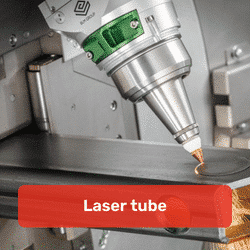
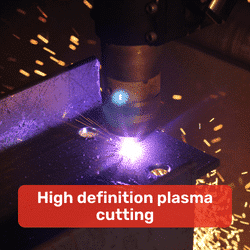
That is why at Initube we specialise in cutting and machining tubes and profiles of all types of ferrous material. We have more than 40 years of experience in the metallurgical sector and we use two types of cutting: plasma and laser tube. If you would like to know more about our procedures or if you have any questions or requests, please contact our team. We put our technology at your disposal so that you can achieve a positive impact on the productivity of your processes.