Plasma cutting is one of the most advanced and efficient techniques in the metalworking and manufacturing industry. Thanks to its precision, speed and ability to work with different types of metals, it has become an indispensable solution both in industrial processes and specialist workshops.
But what exactly is plasma cutting and why is it so popular? Throughout this article we will look at what it is, how it works, what advantages it offers, what materials it can handle and in which cases it is more suitable than other alternatives.
At Initube we have been serving our clients for over 40 years, providing metal cutting and transformation solutions tailored to the needs of each project, with a close, professional service focused on quality.
What Does Plasma Cutting Mean?
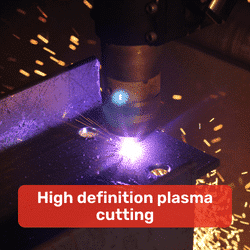
Plasma cutting is a thermal process that cuts conductive metals using a jet of ionised gas at extremely high temperatures. When the gas turns into plasma, it concentrates a large amount of energy onto a specific point of the material and melts it. At the same time, the pressure of the jet expels the molten metal and produces the cut.
Simply put, it is a technology that uses electricity and gas to separate metal quickly. Unlike mechanical methods, cutting here is not achieved by friction or direct physical pressure, but by controlled thermal action.
How Plasma Is Generated
To produce plasma, the equipment subjects a gas to an electrical discharge. That energy transforms the gas into a highly energetic state that conducts electricity. As it exits through the torch nozzle, the plasma concentrates into a very intense arc capable of melting metal.
The result is a clean cut within the parameters typical of this technology, with a working speed that is very attractive for many industrial applications.
Basic Elements of the Process
Although it may vary depending on the installation, a plasma cutting system typically includes the following elements:
- Power supply
- Plasma torch
- Electrode and nozzle
- Gas supply
- Cutting table or guiding system
- Manual or CNC control
How Does Plasma Cutting Work Step by Step?
Although the technology behind it is complex, the general principle is straightforward.
1. An Electric Arc Is Created
The equipment generates an arc between the torch electrode and the metal workpiece, or between internal components depending on the type of system. That arc is the starting point for activating the cutting process.
2. The Gas Turns into Plasma
As it passes through the energy of the arc, the gas ionises and transforms into plasma. From that point, it exits at high speed through a nozzle designed to concentrate the jet.
3. The Metal Melts
The energy of the plasma is directed at the cutting point and melts the material along a specific line. The temperature reached allows conductive metals to be worked with great efficiency.
4. The Jet Expels the Molten Material
The force of the gas itself carries the molten metal out of the kerf. In this way, the cut advances as the torch or workpiece moves along the programmed path.
5. The Desired Geometry Is Obtained
If the system is CNC-guided, the path follows a programmed design. This makes it possible to manufacture repetitive parts, complex contours or shapes tailored to each industrial project.
Main Advantages of Plasma Cutting in Industry
The appeal of plasma cutting is not explained solely by its ability to cut metal, but by how it does so and in which contexts it delivers real value.
High Working Speed
One of its best-known advantages is speed. In many manufacturing processes, this helps reduce production times and keep a more agile workflow in the workshop.
Versatility in Materials and Thicknesses
It can be used on different conductive metals and a wide variety of thicknesses, depending on the equipment configuration. This flexibility makes it a very practical option for companies dealing with diverse orders.
Good Balance Between Performance and Operating Cost
Without going into specific figures, as these depend on each installation, plasma is generally regarded as a competitive technology when seeking productivity without resorting to more complex solutions than necessary.
Integration into Automated Processes
Plasma cutting can be incorporated into CNC tables and automated industrial systems to improve work repeatability and facilitate the serial production of parts.
Application Across Different Sectors
It is used in activities such as:
- Metal structure fabrication
- Industrial locksmithing
- Boilermaking
- Industrial maintenance
- Machinery manufacturing
- Metal construction
- Sheet and tube transformation
Which Metals Can Be Cut with Plasma?
Plasma cuts electrically conductive metals.
The most common ones include:
- Carbon steel
- Stainless steel
- Aluminium
- Copper
- Brass
Carbon Steel
It is one of the most common materials in industrial cutting. Plasma is frequently used for structural parts, brackets, plates, frames and steel components.
Stainless Steel
It can also be worked with plasma, which is very useful in sectors requiring corrosion-resistant parts or components with specific technical requirements.
Aluminium
Aluminium presents certain challenges due to its thermal behaviour, but plasma can be used to cut it in various industrial contexts, especially when speed and adaptability are priorities.
Copper and Brass
Although these materials are less common in some workshops, they can also be cut if the system is set up for them and the working parameters are properly adjusted.
Why Doesn’t It Work for All Materials?
Because the process requires electrical conductivity. Non-conductive materials such as wood, certain plastics or stone are not suitable for this technology.
Which Is Better: Laser Cutting or Plasma Cutting?
Choosing between laser and plasma depends on the type of part, the material, the thickness, the volume of work, the required finish and the productive approach of each company.
When Plasma Cutting Is More Suitable
When:
- Working with conductive metals
- High cutting speeds are required
- Medium to high thicknesses are involved
- Workshop productivity is a priority
- A versatile technology for different tasks is needed
When Laser Cutting May Be More Appropriate
Laser tends to stand out when the project demands:
- Very fine finishes
- High detail on small geometries
- More demanding tolerances
- Decorative or high-definition parts
- A very low level of burring
Factors That Influence Plasma Cutting Quality
The final result does not depend solely on the machine. The adjustment of the process, the condition of the consumables and the working method also play a role.
Type and Thickness of the Material
Each metal responds differently to heat and the plasma arc. In addition, the thickness affects the speed, the power required and the final finish.
Condition of the Nozzle and Electrode
Consumables have a direct impact on cut stability. When worn, they can cause deviations, burring or reduced regularity.
Working Parameters
The amperage, travel speed, distance between the torch and the material, and the gas used all affect the performance of the process. Correct adjustment makes a clear difference to the result.
Guiding System
A manual cut is not the same as an automated one. In industrial applications, CNC provides greater regularity and more reliable part repeatability.
Material Preparation
A clean surface and proper workpiece clamping also contribute to more stable results.
Common Mistakes When Evaluating This Technology
Companies sometimes dismiss or adopt plasma without properly analysing their actual application. Here are some common mistakes.
Judging It Solely by Visual Finish
Finish matters, but it is not the only criterion. Speed, part type, end use and overall productivity also count.
Assuming It Works the Same for Any Job
Each technology has its role. Plasma does not replace all systems, just as laser does not solve every industrial need on its own.
Not Considering Production Volume
A machine may be suitable for one company and not for another. Workload level and part repetition are key factors.
Forgetting Integration with the Rest of the Process
Cutting is just one phase. It is worth considering how it fits in with welding, bending, assembly, machining and internal logistics.
Where Metal Takes Shape: the Choice Matters
Plasma cutting is a key technology in the industrial transformation of conductive metals. Compared to other alternatives, the aim is not to find a single answer, but to assess what each company truly needs: material type, thickness, volume, finish and working pace. When that analysis is done properly, plasma cutting delivers clear value in terms of efficiency and operational performance.
Are you looking for an industrial solution tailored to your projects? At Initube we offer plasma and laser tube cutting for companies across different industrial sectors. Get in touch with our technical team to request a personalised quote.