The mechanization of metallurgy has provided a speed never imagined in the production of this sector. Industrializing all processes leads to greater control, reduced lead times and final parts that are much more similar to each other. Cutting metal parts is no exception. Finding the perfect type of cut can save a company a lot of money and time. Therefore, in this article we are going to explain which are the most popular types of cutting and which should be used depending on the piece to be cut.
But how do you cut metal?
The word ‘metal’ is usually associated with the idea of a very hard and resistant material; and so it is. In order to use as much surface area as possible and to avoid wasting material, metal sheets and bars are manufactured in large formats. Therefore, it is complicated and complex to cut it. The cutting tools that have been devised are designed to perform the cut desired by the customer and also entail the least possible risk for the worker.
There is a type of cutting for a specific use of metal. The size of this also influences the choice of the machine that will cut it. The most common tool, and the one that probably comes to mind right away, is the saw, but chisels or shears are also possible candidates for cutting this material. However, when we talk about the industrialization process, the cutting of metal parts is professionalized and divided into several types.
Types of metal parts cutting
As mentioned before, there are several types of cutting depending on the size and use of the final piece. Below, we will discuss the most popular cuts and what each one is used for:
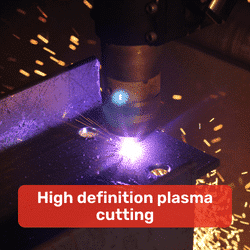
- Plasma cutting. It is one of the most popular cuts, the ‘polyvalent’. We have named it this way because it is used in many sectors, from construction, automotive, aeronautics or steel. The process of this cutting is as follows: a stream of gas at almost 2000ºC creates a plasma beam that literally cuts through the material. It is fast and accurate, easy to use. It also makes it possible to create very linear cuts without imperfections.
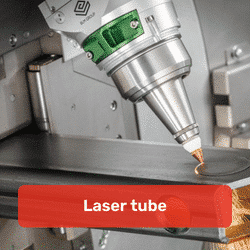
- Laser cutting. If plasma cutting is the ‘all-rounder’, laser cutting is the ‘sophisticated’. With exquisite precision, this guy uses a computer system that cuts metal into the most complex shapes possible. Accuracy and precision are fully assured. Laser cutting is fast and allows both linear and irregular cuts. The only drawback it may have is its price.
- Water jet cutting. This process occurs thanks to the principle of erosion. The pressure of a strong, directed water jet causes the metal to be cut. This process can be a bit slow compared to the previous 2, so sometimes abrasive substances are added to the water to make the material cut faster.
- Drilling. This is the same procedure as when drilling a hole in the wall with a drill: a drilling machine, equipped with a sharp cutting part, makes a hole in the metal thanks to the force and rotation with which it is equipped.
- Milling. This process is used when the surface of the metal must be completely smooth. The grinding machine contains a wheel that moves on contact with the metal and gradually polishes it. This leaves the surface smooth.
- Oxygen fuel cutting. In this type of cutting, a chemical reaction at very high temperatures of oxygen with the metal is provoked voluntarily and in a controlled manner. Before cutting, the metal is heated to high temperatures so that a jet of oxygen vapor oxidizes the metal and a cavity is formed. In this way, the metal ends up being cut.
- Cutting with band saw. It is the cut used in blocks, tubes and metal sheets. The operation is simple: the saw blade moves across the surface of the material, cutting it bit by bit. This blade can be made of various materials (carbon, bi-metal or hard metal) depending on the material and shape of the piece to be cut.
- Abrasive cutting circular saw. It is designed to cut solid pieces of reduced size. Initially, the cutting was dry cutting, which resulted in very irregular and poor quality cuts. Today, refrigerated saws are used. This cut is mainly used in the cutting of linear guides, cemented bars or castings for dental prostheses.
- Circular saw for fast cutting. Also known as High Speed Steel, this saw cuts steel profiles and tubes. It is recommended for when a smooth finish of the piece is required. Aluminum or brass are also suitable materials for this type of cutting.
What type of cut is best?
As we have mentioned from the beginning of this article, the cutting of metal parts must be adapted to the results to be obtained and the shape of the material when we receive it. However, there are 2 types of cutting that may stand out from the others due to their accuracy and the ease they provide. Plasma and laser cutting are the most convenient. The former for its ability to adapt to various sectors and the latter for its precision and practice.
That is why at Initube we are specialists in plasma and laser metal cutting. We study, design and develop each project in a personalized way to meet the requirements of our customers and the market. We service a wide range of industries, from agriculture to marine, always ready to do a seamless job. We work with a large number of companies and brands that have placed their trust in our services and continue to work with us today. You can contact us for any questions or information. We also have an emergency service, thanks to which you can have your order available in less than 48 hours.