To truly understand how materials behave and how they react to different elements, there is nothing like seeing them in action. And in the case of architecture, what better example than the impressive Titania Tower, one of Madrid’s most iconic skyscrapers. Located on the same site as the former Windsor Tower, the Titania has become a landmark of Madrid’s urban landscape, standing as a giant among the skyscrapers of Paseo de la Castellana.
Since its name is given by a type of metal and at Initube we are dedicated to its cutting, we wanted to mention a more specific case today and develop how metal integrates into the most amazing and large-scale constructions to create structures that seem to defy gravity.
First was the Windsor
As we have mentioned, this building, known for the famous El Corte Inglés sign on its top, is the successor of the Windsor building, a skyscraper in the Azca financial complex in Madrid.
Its inauguration was quite an event in 1979, where the architects from the Del Río-Ferrero, Alas, and Casariego studio presented the city with a great example of modern architecture from the late 20th century. With 106 meters in height and 32 floors, the Windsor stood as one of the most iconic skyscrapers in the area. The offices of the Windsor Tower were a hive of activity. Companies and financial entities of all kinds fought for a spot in this giant of glass and steel, among them, the Santander Group itself. Its strategic location, in the heart of the Azca financial district, made it the perfect place to close deals and move millions.
An abrupt end
Unfortunately, the building suffered a devastating fire on February 12, 2005 that spread with incredible speed due to the lack of modern safety systems and the selection of materials used in its construction, which were highly flammable. The flames consumed the Windsor for more than 24 hours and destroyed almost the entire building, even causing part of it to collapse.
Fortunately, the tragedy of the Windsor Tower fire did not claim any lives, although it did render the building completely unusable. This terrible event raised concerns about the safety of skyscrapers in Madrid, triggering alarms among authorities and the population. Experts, after analyzing the remains of the fallen colossus, concluded that demolition was the only viable option. A complex process that extended between 2005 and 2006, where the wounded giant was slowly dismantled, giving way to renewal and hope.
From the ashes, a new titan arises
The land of the now fallen Windsor Tower would go to El Corte Inglés, which began to develop architectural plans to create a new building. It was at that moment that the idea of the Titania Tower emerged, a modern skyscraper inaugurated in 2011 and designed with advanced security and sustainability measures. Despite its tragic end, the Windsor’s history, from its construction to its subsequent replacement, symbolizes both architectural evolution and the importance of safety in modern buildings. Something that the Titania Tower knew how to embrace and apply. Additionally, its name, Titania, the Roman goddess of the earth, evokes the strength and resilience of the old tower, symbolizing the union between the past and the future.
The history of the Titania Tower
Despite being a completely new building, the Titania Tower has a small reminder of the Windsor beyond its location, which is the structure of the underground floors, preserved from the tower that preceded it. Architects Pablo Muñoz and Pedro Vilata were responsible for designing it and began the construction of the new building in 2007.
The commercial part of the complex was inaugurated at the end of 2011 and has now become the flagship of the famous Spanish department store group in Madrid. The main objective of both the architects and the company was to create an attractive building that conveyed dynamism through the use of glass and perforated sheet steel on the facade. With 103.7 meters in height and a total of 27 floors (5 of which are underground and used as parking), it is almost as tall as its predecessor.
The first 7 floors are used by El Corte Inglés as a shopping center of its brand and has a total of 21,133 m² of commercial space. Above this volume are 2 technical floors that house machinery (air installations, fans, pumps, etc.) that serve the shopping center and offices. There are another 2 technical floors at the top of the building, on floors 20 and 21. The office area rises from a rectangular base and is completely covered in the brand’s characteristic glass color, offering 14,430 m² of space. According to the different functions of the building, there are 2 entrances, a main one to the shopping center and another to the office area lobby.

The metal that forms it
The underground part of the old Windsor Tower remains alive in the Titania thanks to the use of the 5 basement floors that survived the fire. Thus, the underground areas of the building were taken into account to create the new one, which is completely fabricated and assembled by Callfer SA. Its new structure is almost entirely made of steel profiles and assembled with screws at all joints. Only a large rigid core, acting as a stabilizer and containing elevators and a staircase, and another 2 smaller cores with additional elevators and freight elevators, are made of concrete.
Most of the columns are HD laminated profiles, with more than 1,000 tons of S 460-M quality supplied. Only a small part are mixed, that is, with HEB profiles of S 355-JR quality. The transition between the old concrete structure and the new steel one is made through 10 or 6 mm thick laminated steel plates and S 460-M quality, with threaded bolts from 40 mm diameter corrugated bars.
The beam framework on all floors is HEB metal profiles of different sizes, except for some beams (built with HEM profiles). On the seventh floor, where the shopping center ends and the offices begin, 2.5-meter-high trusses were installed to cover a cantilever over a 28-meter-high void. These trusses are built with HEB profiles, both in the upper and lower chords and in the uprights and diagonals.
In total, almost 5,000 tons of S 275-JR quality have been used in the construction of all these horizontal structures, on which the floors have been placed. These floors, covering more than 30,000 m², are of the mixed type, with a 1 mm thick collaborating sheet as an integral part of the final 200 mm high slab.
The future owner of the tower
As we have mentioned, one of the most particular visual and aesthetic characteristics of the Titania Tower was its El Corte Inglés sign, which lights up the Madrid nights. Changes are anticipated for this building, as the owning company, known for its distinctive green glass windows that reflect the colors of its logo, has decided to put it up for sale.
The strategic consultant CBRE will be responsible for managing the sale of the property, which has an initial price of 230 million euros, although the company expects to obtain more than 250 million. An initial schedule has been set for the sale with the aim of closing the deal before the summer of 2022. Currently, CBRE is in an initial contact phase that will last 4 weeks to assess the interest of potential buyers. The property is expected to be acquired by the selected buyer, and the company will begin negotiations once the initial, non-binding offers are presented.
The main reasons why El Corte Inglés continues with its divestment operations have changed. If in the past these were focused on cleaning up accounts and improving the Group’s profitability, now the funds obtained will be allocated to 2 key objectives. On the one hand, to advance the commitment to digitalize its business model and, on the other, to accelerate the deep diversification process that the company has intensified since the pandemic.
The entry of Mutua Madrileña into El Corte Inglés, which contributed 1.105 million euros through the sale of 50.01% of its insurance companies and 8% of its capital, has allowed the company to improve its finances. As a result, El Corte Inglés can now use the income from property sales to accelerate the implementation of its new strategic plan. This plan aims to transform the company from a traditional retailer into a true ecosystem of services.
What will the new model be like?
The new model would continue to rely on the company’s retail activity, but will increasingly give a more important role to new activities that have been recently incorporated. El Corte Inglés seeks to gain market share in key sectors such as food, travel, and insurance, while offering services in 3 new strategic areas:
- El Corte Inglés Logistics (new logistics operator with services to third parties).
- Sweno (mobile operator and energy marketer)
- Sicor (brand of auxiliary services, security, and alarms).
Regardless of who the owner is, what is certain is that the architects of the Titania Tower have learned from the mistakes of its predecessor and opted for much safer materials, such as steel, in addition to equipping it with greater protection against any eventuality. If there is something we can learn from this, it is that metals can be a safe and efficient choice for such large-scale buildings, where great architectural skill and precision in each of the cut metal pieces are required.
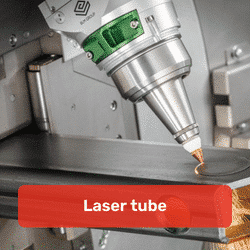
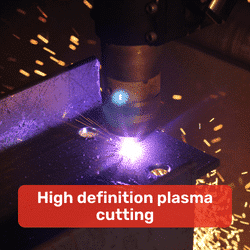
Every detail counts for the metal pieces to offer the properties they are chosen for and fit perfectly with the project plans. That is why at Initube we value their cutting so much, that we have been specializing for over 40 years in 2 types of cutting and machining of tubes and profiles of all kinds of ferrous material. On the one hand, laser tube and on the other, plasma cutting.
If you want to know more about our work process or are looking for a quality company to work with, you just have to contact our team so they can start considering your needs and offer you a budget tailored only to them.